Physical AI in Africa needs ground truth first
Physical AI drew $47.4B of venture funding in H1 2026. In Africa, its bottleneck is not models but trusted, dated facts about real places. Here is why, and how to supply them.
Short answer: physical AI is AI that acts in the real world: robots, delivery fleets, retail and mapping models, world models. To work in Africa it needs ground truth: specified, dated and consented observations of real places. Most of that does not exist online. The fastest way to get it is to ask people who are already there, and to check what they send.
Physical AI is where AI money is moving
In March 2026, NVIDIA’s Jensen Huang opened GTC with a simple line: “Physical AI has arrived.” Investors agree. Crunchbase counted $47.4B of venture funding into physical AI in the first half of 2026, against $12B in the second half of 2025. One very large round makes up about a third of that, but the direction is clear.
The builders keep naming one constraint. Niantic Spatial calls 2026 “the year of the world model” and argues that as AI moves into physical action, data becomes scarcer. A model cannot act well in places it has never observed.
Africa’s real economy is the biggest blind spot
The web describes Africa’s formal economy reasonably well. It barely describes the informal one, where most people shop and work. South Africa’s township economy alone is estimated at about R1 trillion, and about 80% of surveyed township businesses are unregistered (Standard Bank’s Township Informal Economy Report, October 2025). If most businesses are not on any register, they are not in any dataset either.
The physical world can’t be scraped. A model cannot know what it has never seen.
Our thesis
Satellites see roofs, not shelves. Street-level imagery is old where it exists and missing where it doesn’t. Business registries miss most informal traders. For a brand deciding where to stock, a lender deciding who to serve or an AI team training a model of a township street, the missing fact is usually simple: is it there, what does it cost, is it open, did the campaign run?
Ground truth needs someone in the place
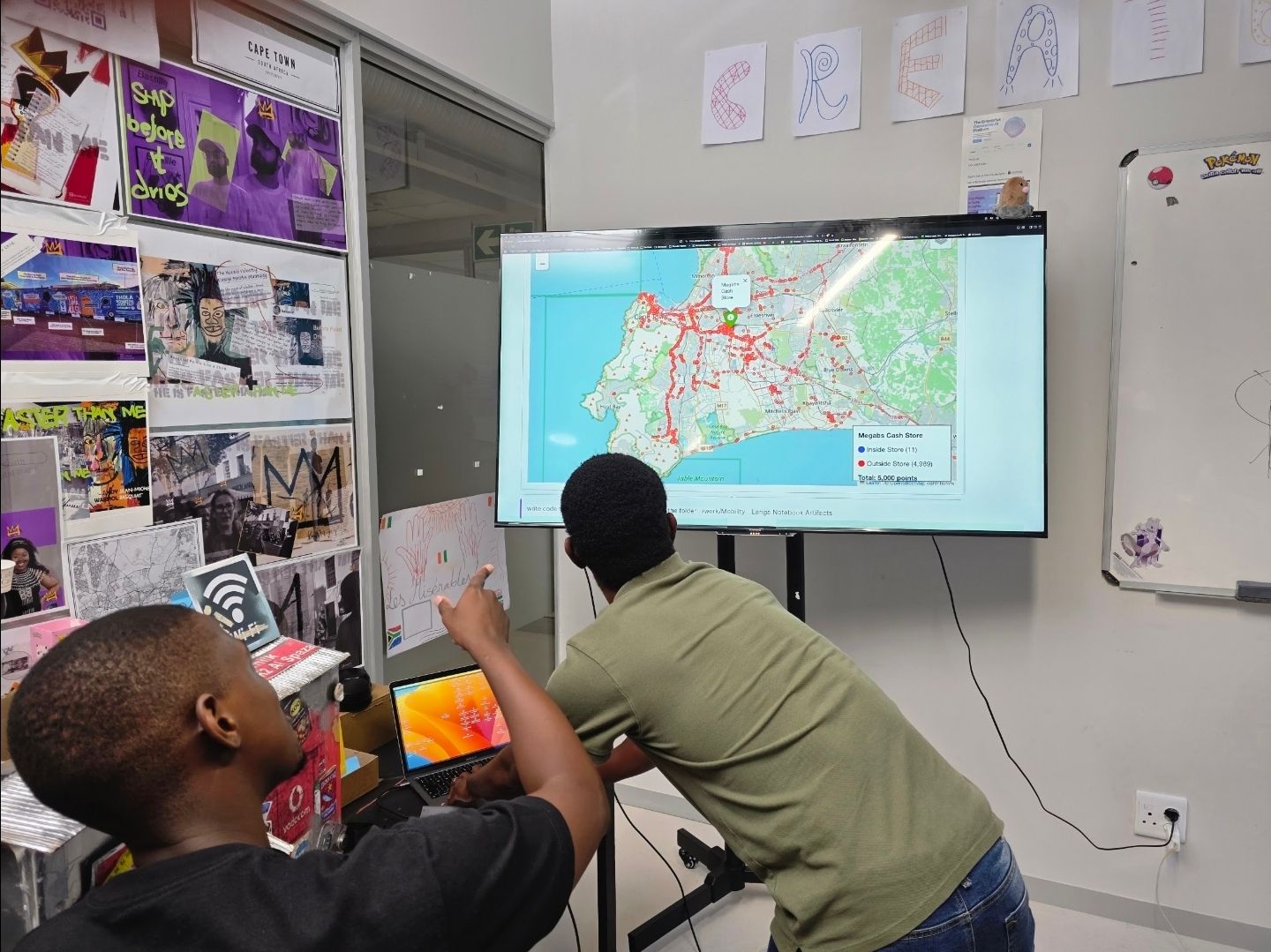
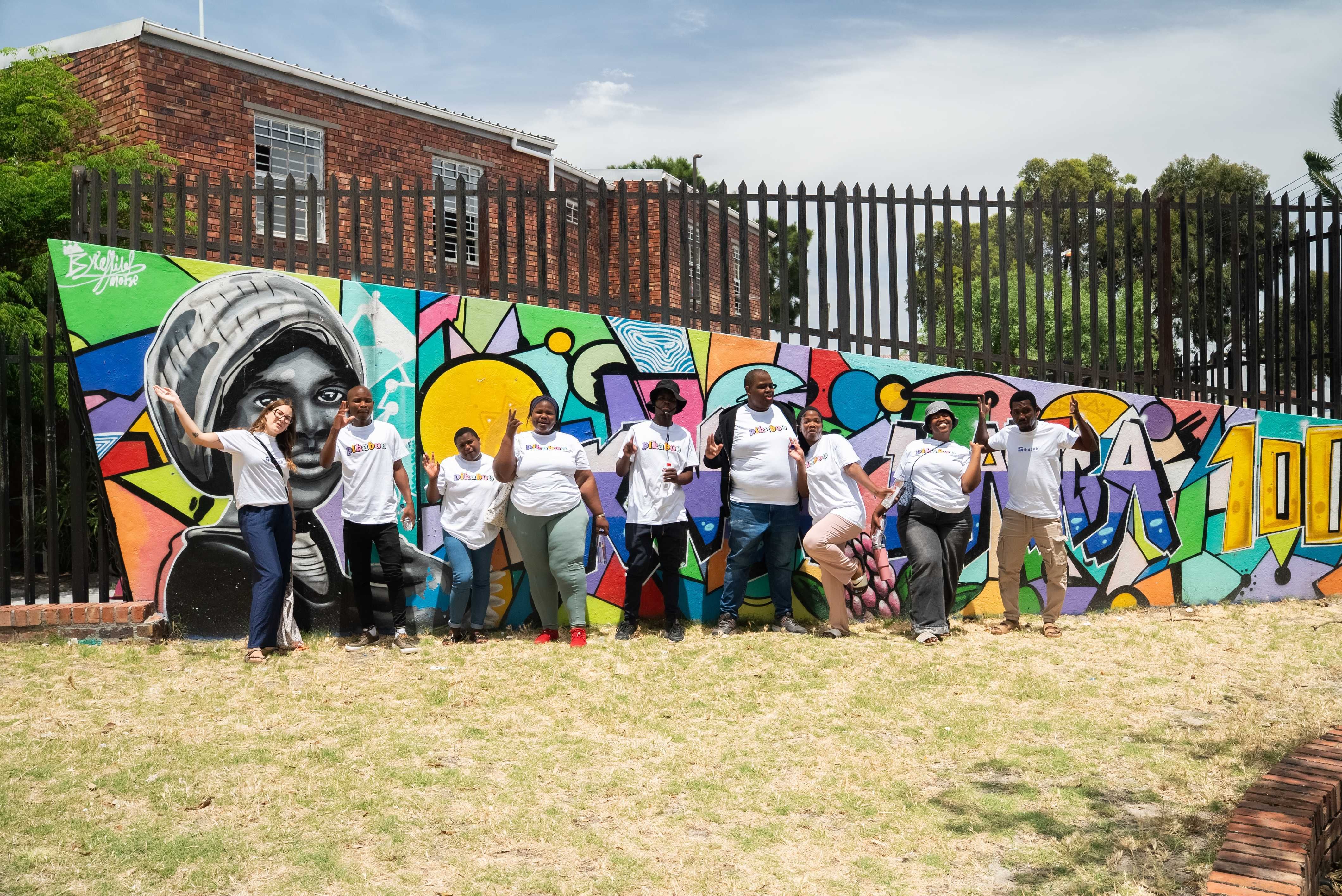
Machines will collect more of this over time. Today, in an informal market, the most reliable sensor is a person nearby with a phone. That is the model Timbuk2 runs:
- A buyer asks about a place. The places, the question, how often, and the rule an answer must pass to count.
- People nearby check. Each answer carries a photo, location and time.
- Every answer is checked before it counts. AI handles the routine checks; people review anything unclear.
- The buyer decides, and asks again when the decision comes back. Places change, so the value is in the refresh.
What good ground truth looks like
Not every observation is ground truth. For physical AI, a useful record has five properties:
- Specified. The question and the acceptance rule are agreed before collection starts.
- Located and dated. GPS and a timestamp from the moment of capture.
- Evidenced. A photo or other proof attached to the answer.
- Reviewed. Checked against the rule before it counts, with unclear cases sent to a person.
- Consented. Contributors opt in, are pseudonymous by default, and no record is licensed for model training without agreed consent.
Why this is an African opportunity, not only an African problem
African tech funding reached $4.1B in 2025, up 25%, and South Africa led equity funding for the first time since 2017 (Partech). The companies that win here will not be the ones with a new model; they will be the ones with data nobody else has, collected in a way people and regulators can trust.
That is the network we are building at Timbuk2: the place AI can ask when the answer is not online. If you are an investor or an AI team working on physical AI in emerging markets, read our investor thesis or scope a ground-truth sample.
Sources
- Crunchbase News, physical AI funding H1 2026, 18 August 2026
- TechRepublic, NVIDIA GTC 2026 recap
- Niantic Spatial, “World models in 2026”, 13 January 2026
- Sunday Independent, Standard Bank Township Informal Economy Report, 15 October 2025
- Partech Africa Tech VC Report 2025, 22 January 2026
- Timbuk2 examples: dated field evidence.